Is AI going to replace my job?


Probably not in the way you’re imagining. But that’s not the same as saying nothing will change.
This question has been typed into Google millions of times in the past two years. And the honest answer is that most people asking it are looking for reassurance, when what they actually need is a clear-eyed look at what’s happening.
What AI is actually good at right now
AI is very good at tasks that are repetitive, pattern-based, and well-defined. Writing a first draft, summarising a document, generating code from a description, answering common questions, processing data. If your job is mostly made up of those kinds of tasks, some of that work will get automated — or already is being automated quietly.
Where AI falls apart is judgment, context, and accountability. It doesn’t know your client. It doesn’t understand the unspoken dynamic in a room. It can’t be held responsible for a decision. It hallucinates facts with complete confidence. These aren’t small gaps — they’re the gaps that most real jobs live in.
The jobs most at risk
The roles most exposed are the ones that sit in the middle: not highly skilled, but not purely physical either. Data entry, basic report writing, first-level customer support, routine legal drafting, simple bookkeeping. These aren’t going away overnight, but the number of people needed to do them is shrinking.
This has happened before. ATMs didn’t eliminate bank tellers — the number of tellers actually increased after ATMs were introduced, because branches became cheaper to run and banks opened more of them. The job changed. That’s a more likely outcome for most roles than full elimination.
What’s not going away
Anything that requires genuine trust is safe for a long time. People don’t want an AI to advise them on their mortgage when they’re stressed about whether they can afford the repayments. They don’t want a chatbot to tell them their business is structured badly. They want a person who understands their situation, who they can push back on, and who will be there next year when something goes wrong.
Trades, healthcare, education, relationship-driven professional services — these are durable. Not because AI can’t assist in them, but because the human element is the product.
The more useful question
Instead of asking whether AI will replace your job, the better question is: which parts of my job could AI do, and what would I do with that time?
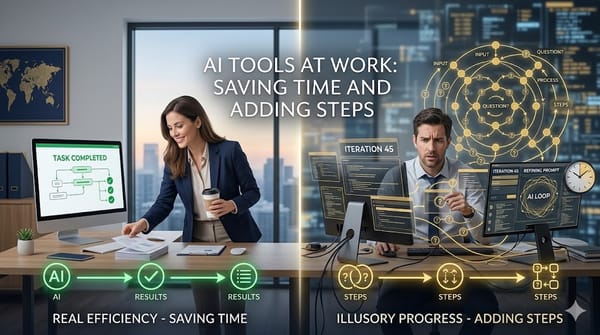
The people I see doing well with AI aren’t the ones who ignored it or the ones who became obsessed with it. They’re the ones who picked two or three things AI does better than them, handed those off, and spent the time on the work that actually requires a person.
That’s not a threat. That’s just what every wave of technology has looked like from the inside.